Command and control
More
Operational Level of Command
Military command and control is carried out at three levels: the strategic, operational and tactical levels. Questions and answers about the operational level of command.




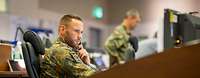
The BwJFC is responsible for operational-level planning and the operational-level of command
Military command and control is carried out at three levels: the strategic, operational and tactical levels. In this respect, the operational level of command is a mediator and translator between the political objectives of the strategic level and the tactical action at the local level.
Military command and control is carried out at three levels: the strategic, operational and tactical levels. Questions and answers about the operational level of command.
In national and collective defence, special operations forces have a broad spectrum of tasks. No matter whether operating at sea, on land or in the air, they conduct missions that see other operational forces reach their limits. Such missions include special reconnaissance as well as direct offensive operations against enemy high-value targets. Eliminating hybrid threats before, directly at or behind enemy lines is another characteristic type of mission conducted by special operations forces. In crisis areas and war zones, they moreover support strategically important actors, which may include irregular forces such as resistance networks.

They are few but have a great impact, preparing the ground for follow-on forces to fight successfully.
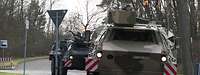
Host nation support is the support provided for foreign armed forces in Germany. When the military forces of friendly nations pass through Germany, Germany – in its role as a host nation – provides a wide range of services in consultation with the allied troops. These services include food, accommodation, fuel, medical care and technical support, as well as legal advice and guarding activities. This support for allied countries’ troops staying in or moving through its territory is one of Germany’s most important commitments to NATO. It is Germany’s contribution to the North Atlantic Treaty Organization’s Reinforcement and Sustainment Network.
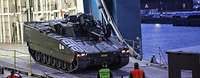
The Bundeswehr provides host nation support to the armed forces of allied nations staying in or transiting through Germany.
Due to the new threat situation on NATO’s eastern flank and the growing number of trouble spots emerging in a globalised world, it is essential to be able to deploy troops efficiently at all times and quickly bring their military power to bear. Rapid strategic deployability is therefore a key element of national and collective defence. National RSOI precedes strategic deployment. The Bundeswehr Joint Force Command acts as the command responsible for initial deployment of the German forces.
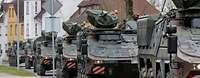
Strategic deployability is essential for national and collective defence. National initial deployment precedes deployment.
National risk and crisis management serves to protect German nationals abroad – by preparing for and managing crises, even by military means if necessary. The task spectrum ranges from advising Germany’s missions abroad and supporting diplomatic evacuations with aircraft of the Special Air Mission Wing to military evacuations, including rescue operations and hostage rescue operations. The Bundeswehr keeps forces available in a permanent state of readiness for national risk and crisis management. The Bundeswehr Joint Force Command is responsible for the planning of operations and command and control of the forces.
The Bundeswehr is particularly visible to the German population whenever it supports civilian organisations in the event of natural disasters and grave accidents. These support services are grouped under the term “administrative assistance and disaster relief”. Article 35 of the Basic Law requires all authorities at the federal and state levels to provide administrative assistance to each other; this also applies to the Bundeswehr. The Bundeswehr Joint Force Command is responsible for coordinating Bundeswehr assistance and support activities.
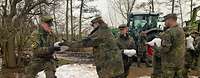
In the event of grave accidents or disasters, the Bundeswehr can support civil authorities with personnel and equipment. The legal basis for this assistance is Article 35 of the Basic Law, the German constitution.

