
Quadriga 2025
Silver Dagger: Special operations forces are training in Finland
For four weeks, approximately 1,600 military personnel from nine nations trained special operations on NATO’s northern flank




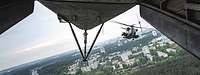
During Flaming Sword 2026, special operations forces from nine countries trained in the Baltic region.
Special operations forces are pioneers of national and collective defence. Their operations prepare the way for the deployment of subsequent forces, early on and effectively, especially behind enemy lines. During Flaming Sword 26, the largest multinational special operations forces exercise under Lithuanian command, military personnel from nine nations demonstrated their skills for three weeks in May 2026. The German contribution to the exercise, Silver Dagger, was also part of the Quadriga Bundeswehr-wide large-scale exercise. Participants included military personnel from the Special Operations Forces Command of the Bundeswehr, the 64 Helicopter Wing, the Binational Air Transport Squadron Rhin/Rhein and the 62 Air Transport Wing as well as the Bundeswehr Joint Force Command.
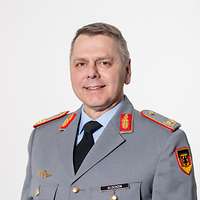
We are exercising with the partner that we would also fight with in the event of an Alliance contingency, in as realistic a scenario as possible, side by side against the enemy.
The scenario: twenty days after an attack on the Baltic states, parts of Lithuania and Estonia are occupied, routes towards the south have been cut off, enemy forces are advancing on the Lithuanian capital, Vilnius. The first wave of NATO special operations forces is already well into enemy occupied territory. They are conducting special reconnaissance, that is to say identifying high-value targets, for example, such as enemy command posts or military commanders, in order to prepare for precision strikes or capture.
The conditions for the special operations forces and their commanders are challenging. Air sovereignty over the area of operations does not exist, meaning that deployment by helicopter or aircraft is only possible in limited and carefully prepared time windows. Behind enemy lines, the teams are on their own: no supplies, no medical support, and minimal opportunities for communication with the operational command. The tasks assigned to the special operations forces teams are varied, ranging from destroying critical infrastructure – such as radar systems, pylons and bridges – to capturing key enemy personnel. A core task of special operations forces beyond the front line is preventing hybrid attacks.

Emergency medical care was also part of the exercise
Bundeswehr/KSK
The special forces soldiers search for indications of CBRN agents in the saboteur’s cache
Bundeswehr/KSKAn example from the exercise: A defector is suspected of preparing an attack with biological or chemical weapons. He is observed, his habits are monitored, options for a targeted arrest are explored – and all this in the enemy occupied part of Lithuania. The special operations forces prepare to make an aerial arrest. An opportunity arises when he is driving a car. The KSK soldiers stop the vehicle. The saboteur is swiftly arrested and put onto a helicopter. It only takes a few minutes before all forces are in the air. Back on NATO-controlled territory, the defector is handed over to the Lithuanian security authorities. The German personnel get ready for their next mission.
Special operations forces and Air Force and Army specialised forces worked hand in hand on the arrest – with each other and with their Lithuanian Allies. For the German Air Force, Flaming Sword was a milestone and a practical test at the same time. It was the first time that Germany led a multinational Special Operations Air Task Group (SOATG) planning air support for the special operations forces on the ground. Lieutenant Colonel Alexander T., a pilot and project officer in 64 Helicopter Wing, explains: “Special operations with air support demand complex command and control processes that are also highly dynamic. Over the past twelve months, we have been consistently expanding and testing our capabilities. We can do this. We are serious about this.”
Brigadier General Torsten Glockzin, Director of the Bundeswehr Special Operations Forces, stresses: “Lithuania is one of the cornerstones of Germany’s commitment in NATO. During Flaming Sword, our Lithuanian partners created realistic exercise conditions based on Ukraine’s war experiences and involving as few artificial exercise elements as possible, in keeping with Lithuania’s special importance as a NATO frontline state.”
Colonel Darius Milašius, commander of the Lithuanian-led special operations forces headquarters, SOCC Baltic, adds: “The German-Lithuanian special operations forces partnership is unique. We share the same values, the same approaches, the same goals.” This creates real cohesion and increases combat readiness for joint defence of NATO’s eastern flank.
