
In the air and on the ground




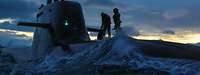
They are few but have a great impact, preparing the ground for follow-on forces to fight successfully.
Special operations forces are called into action when other forces reach their limits. Their operations provide commanders with options for action – and often create the very conditions necessary for follow-on forces to accomplish their mission.
In national and collective defence, special operations forces have a broad spectrum of tasks. No matter whether operating at sea, on land or in the air, they conduct missions that see other operational forces reach their limits. Such missions include special reconnaissance as well as direct offensive operations against enemy high-value targets. Eliminating hybrid threats before, directly at or behind enemy lines is another characteristic type of mission conducted by special operations forces. In crisis areas and war zones, they moreover support strategically important actors, which may include irregular forces such as resistance networks.
In the event of attacks on NATO territory, special operations make a vital contribution to ensuring that follow-on military forces will be able to fight successfully. Special operations forces provide military commanders with options for action. In addition, in times of crisis and war, they contribute significantly to background information being supplied to political decision-makers. This is because one of their most important tasks is to collect key information in the depth of the enemy area or enemy-occupied area at an early stage.
That task includes gathering information on troop movements or the spatial distribution or relocation of resources such as weapon systems, ammunition or materiel reserves. It also involves gaining intelligence on facilities or infrastructure that are or may become relevant to the enemy’s or the own forces’ operations command. An important fact in this context is that special reconnaissance is an integral part of military reconnaissance as the key information obtained can be crucial for decision-making at the operational, military-strategic and security policy level. However, special operations forces do not perform intelligence activities as such, which is part of the responsibility of the secret services instead.
Special operations forces are trailblazers and catalysts. Their early actions in the depth of the enemy area pave the way for effective follow-on operations.
Another core task of special operations forces is to conduct combat operations behind enemy lines: They neutralise enemy radar and air defence systems. They capture essential command and control technology. Or they detain relevant enemy actors. With only a small number of personnel, special operations forces thus achieve a great strategic effect – even in the depth of the enemy area, where they operate autonomously to a large extent.

Action at sea: When boarding suspicious vessels – in this case a multi-purpose cargo freighter during an exercise in the Baltic Sea – German Navy combat swimmers operate simultaneously from the water and from the air
Bundeswehr/Benjamin Bendig
A look at the details: Micro reconnaissance drones can be used to take close-ups in real time in order to prepare or support operations targeting persons, vehicles, weapon systems or other target objects
Bundeswehr/KSKThe Bundeswehr’s special operations forces are also employed to counter terrorist threats and subversive forces, for example when defence-essential critical infrastructure or military assets must be defended against hybrid warfare. The aim is to maintain and, if necessary, restore the scope of action of the operations command – at and behind the front line, for example on occupied NATO territory.
In Germany, as well, special operations forces can be employed in national and collective defence scenarios, for example to ensure the smooth functioning of Germany acting as a hub for the deployment of NATO forces in the event that this very hub is sabotaged by hostile armed military forces. In such context, they support the police authorities responsible for threat prevention. In exceptional cases, Bundeswehr special operations forces may be employed to support domestic security authorities by providing administrative assistance in accordance with Article 35 of the Basic Law.
The general conditions applying to special operations in the context of national and collective defence differ significantly from those conducted as part of international conflict and crisis management, which has been the focus of German special operations forces so far. The potential adversary now is more experienced in warfare, better equipped and better trained than terrorist groups or irregular fighters. Combat is harder, and losses are heavier– including those among own forces.
In an Article 5 scenario, friendly forces generally do not have the same freedom of action as during the missions in Afghanistan or Mali, for example concerning operations in the airspace. In addition, state-of-the-art reconnaissance assets ranging from drones to satellites create an almost transparent space in which also special operations forces are constantly at risk of being detected. This makes deep operations behind enemy lines far more dangerous – and has an impact on the types of mission conducted.
One example: In the context of long-range strikes against the enemy, known as deep strikes, the operators’ focus has so far been on marking a target for a guided missile by means of laser. According to Brigadier General Glockzin, this is different now: “On a transparent battlefield, it is almost impossible to operate undetected. Instead, what must be done is to create a wormhole for a targeted strike behind the frontline.” What Glockzin refers to is a defined corridor in terms of both time and space, in which the enemy air defence is eliminated and the target can actually be destroyed. Here, special reconnaissance and combat operations interact closely for effective preparation of such a deep strike. Glockzin emphasises: “The success or failure of special forces operations can have an immense impact on the course and outcome of a war. For successful national and collective defence, the capabilities of our special operations forces are indispensable.”

Protection from the air: A door gunner of the Air Force special operations forces provides cover to special operations forces personnel on the ground
Bundeswehr/Leon Belz
In special operations – in this case a simulated severe injury – personnel of the Special Operations Medical Support Teams (SOMST) perform lifesaving measures until any injured persons can be evacuated.
Bundeswehr/KSK
